
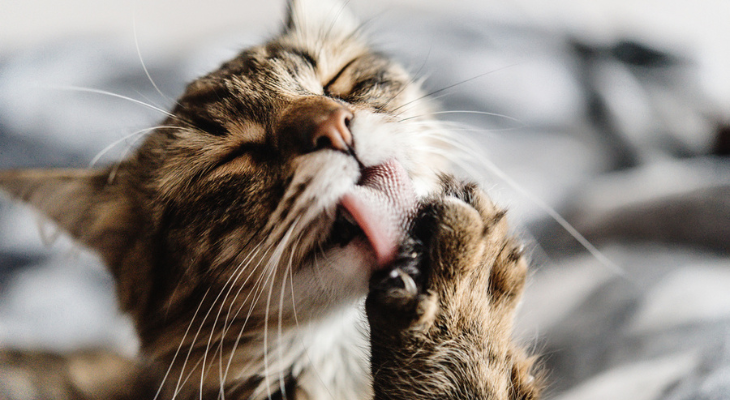
Does Your Cat Have an Overgrooming Problem?
Grooming keeps your cat's fur clean, shiny, and spreads moisturizing oils throughout your furry friend's coat. Although grooming is essential for your cat's health and comfort, overgrooming can irritate your furry friend's skin and lead to hair loss and open sores.
What Causes Excessive Grooming?
Cats become obsessed with grooming for several reasons, including:
- Parasitic Infections. Your cat may lick, bite, and chew its coat if it has fleas, skin mites, ear mites, lice, or other parasites.
- Allergies. Allergies to foods, pollen, dust mites, fleas, and other allergens may make your pet's skin itch. Grooming offers a temporary way to relieve the itch. Skin issues are common in cats and may affect as many as six to fifteen percent of cats, according to Cornell Feline Health Center.
- Stress. Your pet may be reacting to a change in its environment or struggling with a mental health issue. Death of a pet or family member, the introduction of a new pet or family member, moving, or even rearranging the furniture could stress your kitty. According to PetMD, grooming may trigger the release of endorphins, hormones that have a calming effect on your pet.
- Pain. Does your cat constantly lick one area? Overgrooming could be a reaction to pain or an infection in that part of the body.
- Boredom. Despite their reputation as aloof creatures, many cats enjoy spending time with their favorite people. When everyone's away at work or school, your pet may be bored and resort to overgrooming.
Tips to Prevent Overgrooming
Wondering what to do about your cat's grooming problem? Visiting the veterinarian is a good first step. Your pet's doctor can determine why your cat won't stop licking its fur. Treatments depend on the cause of the problem. For example, if a urinary tract infection (UTI) is the reason for your pet's overgrooming, your cat may need to take antibiotics and eat a diet specially formulated to prevent UTIs. Itchy skin due to a dust mite allergy might be treated with medication to ease the discomfort and inflammation, in addition to prescription shampoos or topical treatments.
No matter what the cause of your cat's grooming issues, these tips will help reduce your pet's urge to overgroom:
- Keep Up with Parasite Control. If you've ever been bitten by a flea, you can probably sympathize with your pet. It's difficult to stop scratching the itchy bite, even though you know you shouldn't. Once-a-month topical treatments or pills can kill adult fleas and eggs on your cat's fur before they can cause problems. Flea collars can also be helpful, although some shouldn't be used if your cat takes a flea prevention pill or receives topical treatments monthly. If your cat has a current flea problem, you'll need to vacuum your home, steam-clean upholstery and carpeting, and wash bedding.
- Reduce Your Pet's Stress Level. If stress is the cause of your pet's overgrooming habit, look for simple ways to ease anxiety and stress. Keep your pet's litter box clean, don't rearrange the furniture, feed your pet at the same time every day, and introduce new pets or people gradually, if possible. If those strategies don't help, your pet's veterinarian can recommend supplements, pheromones, or medications that can help calm your furry friend.
- Spend More Time with Your Pet. Games are much more fun when they're played with your pet's favorite people. Schedule daily play sessions and increase one-on-one time with your pet.
- Offer Stimulation. Give your cat plenty to do when you're not at home. Pet supply companies offer plenty of interactive games that will keep your pet entertained and intellectually stimulated. Indulge your pet's natural love for exploring with climbing structures and tunnels. These items don't have to be expensive. Your cat will appreciate a tunnel made of a few cardboard boxes taped together just as much as an expensive store-bought tunnel.
- Provide a Sanctuary. A quiet, safe place is a must when your cat is feeling stressed or overwhelmed. Create a cat-friendly retreat by placing an enclosed cat bed or a box with a soft cushion in an out-of-the-way place.
Concerned about your pet's grooming habits? Contact our office to schedule an appointment with the veterinarian.
Sources:
Cornell Feline Health Center: Feline Skin Diseases, 2023
PetMD: Why Cats Overgroom and How You Can Stop It, 7/25/2019
https://www.petmd.com/cat/general-health/how-tell-if-your-cat-over-grooming
Purina: Cat Overgrooming: Causes and Treatment
https://www.purina.co.uk/articles/cats/health/daily-care/why-do-cats-overgroom